Charting Software-Driven Payment Pathways That Shape No-Deposit Offers and Addiction Controls Across Austrian Mobile Casino Platforms
Jakob Keller · Aug 23, 2026
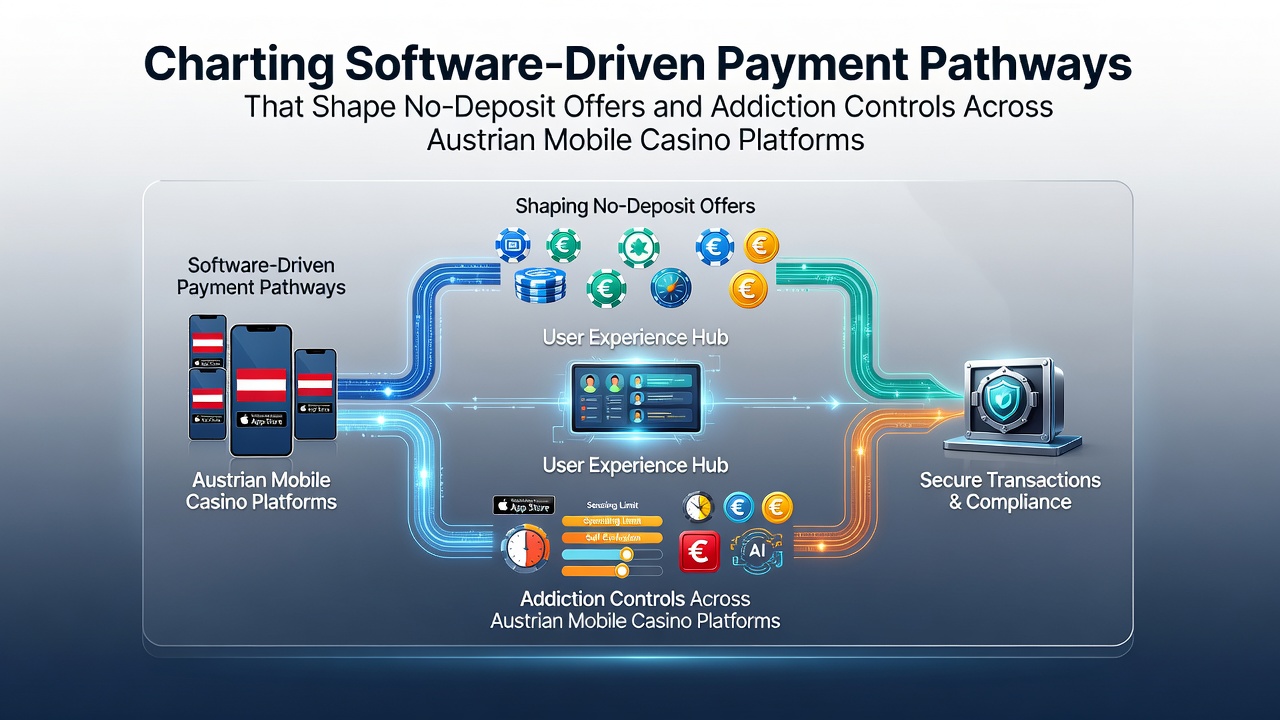
Charting Software-Driven Payment Pathways That Shape No-Deposit Offers and Addiction Controls Across Austrian Mobile Casino Platforms
Software systems now dictate how payments move through Austrian mobile casino platforms, and these same systems determine which no-deposit offers reach users while embedding addiction controls at every transaction step. Data from payment processors shows that real-time verification layers connect directly to bonus engines, so eligibility checks happen before any virtual credit appears in an account. Observers note that this integration means a player’s payment history influences whether a no-deposit offer activates, because algorithms flag repeat patterns that might indicate higher risk.
Payment Software Architecture in Austrian Mobile Environments
Payment gateways used across Austrian mobile casino platforms rely on modular APIs that link banking rails, digital wallets, and prepaid instruments to central compliance servers. These modules process authorizations in milliseconds while simultaneously querying responsible gaming databases. Research indicates that such architecture allows platforms to apply deposit limits and exclusion flags without interrupting the user flow, since the same code path that approves a transaction can also block or redirect it. In August 2026 several operators updated their gateway versions to include biometric confirmation steps that further tie payment approval to verified identity records.
Those who manage these systems report that no-deposit offers are generated through conditional rulesets inside the same software stack. The rulesets read transaction velocity, device fingerprint, and prior bonus redemption data before releasing promotional credits. Figures from industry reports reveal that platforms using unified payment and bonus engines see faster offer distribution yet also maintain stricter spend caps once the credit activates.
How Payment Pathways Influence No-Deposit Offer Distribution
Payment pathways shape offer availability because the software evaluates risk scores at the moment a user registers or links a new payment method. When the score stays below a threshold, the system releases a no-deposit code automatically. When the score rises, the offer either shrinks or disappears entirely. Studies from European research institutions demonstrate that this scoring draws on payment metadata such as card issuer country, previous chargeback counts, and wallet top-up frequency. Consequently, users who rely on certain prepaid instruments may encounter fewer no-deposit opportunities than those using established bank transfers.
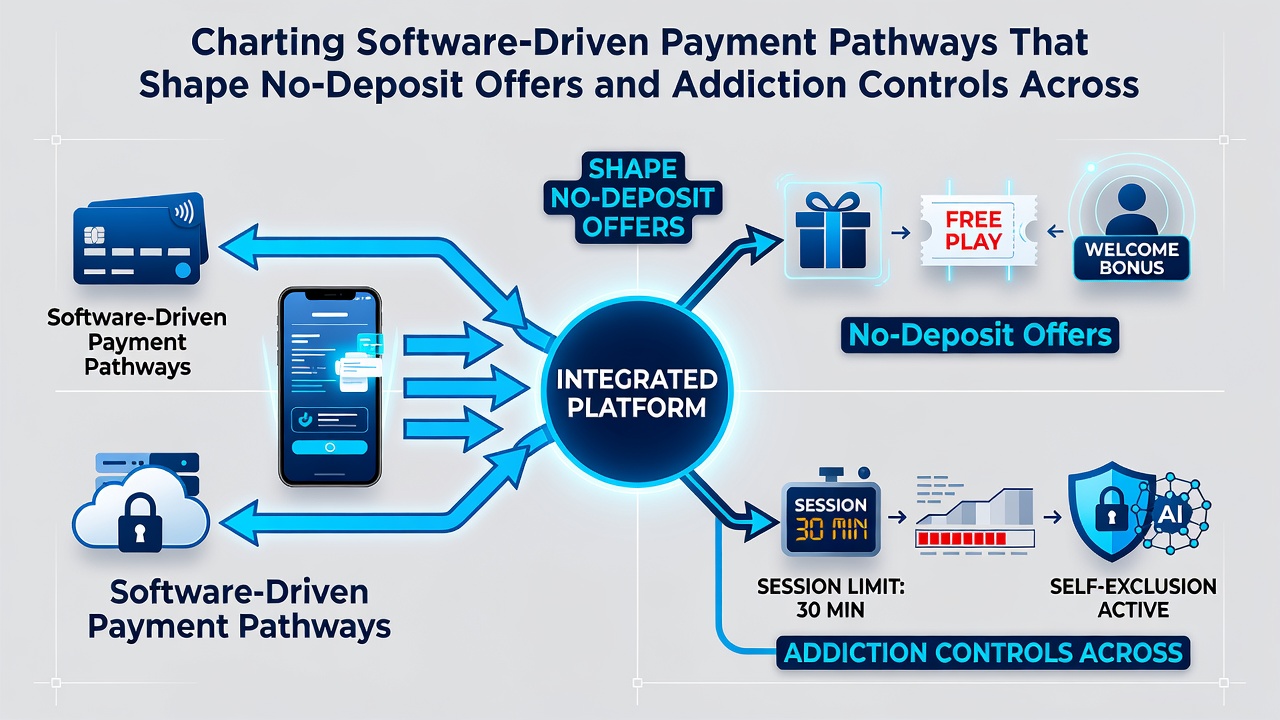
One study revealed that operators who tightened the payment-to-bonus linkage in 2025 recorded a measurable drop in accounts that claimed multiple no-deposit offers within short windows. The same linkage also feeds data into session timers and loss-limit triggers, so the moment a player approaches a predefined threshold the software can pause further play or redirect the user to support resources.
Addiction Controls Embedded in Payment Processing Layers
Addiction controls sit inside the payment processing layers rather than as separate overlays. Time-based limits, deposit caps, and reality-check prompts all trigger through the same transaction pipeline that handles deposits and withdrawals. According to data compiled by the Australian Gambling Research Centre, platforms that embed these controls at the payment level achieve higher compliance rates because users cannot bypass the checks by switching payment methods mid-session. Canadian provincial regulators have documented similar outcomes where unified payment and control systems reduced the number of self-exclusion breaches reported each quarter.
Software vendors continue to refine the algorithms that decide when a control activates. Machine-learning models now analyze sequences of small, rapid deposits that often precede extended play sessions. When patterns match known risk indicators the system can impose temporary holds or require additional confirmation before processing the next transaction. Observers note that these interventions occur without user notification in some cases, preserving the flow while still enforcing limits set by the player or the operator.
Regulatory Context and Platform Adaptations
Austrian licensing requirements mandate that payment software undergo regular audits to confirm that responsible gaming features function as described. These audits examine whether no-deposit offers respect the same limits applied to cash deposits and whether exclusion lists update across all connected payment channels in real time. Platforms that fail these checks face restrictions on their license scope until the software passes re-evaluation.
External analyses from the European Gaming and Betting Association highlight that operators who invest in integrated payment and control systems report fewer regulatory inquiries related to bonus misuse. The association’s 2026 overview also notes that cross-border data sharing agreements allow Austrian platforms to compare payment histories against lists maintained by regulators in neighboring jurisdictions, further tightening the accuracy of risk scores.
Conclusion
Payment pathways in Austrian mobile casino platforms now serve as the central control point for both no-deposit offer distribution and addiction prevention measures. The same software modules that authorize transactions also enforce eligibility rules and trigger protective interventions, creating a unified system that regulators and operators continue to refine. As updates roll out through August 2026 and beyond, the emphasis remains on maintaining transaction speed while ensuring that risk data flows directly into every bonus and limit decision.